

12 Lessons From Performing at Nateland Live
The Grind, The Math, & The Experiences (Comedy Minhdacks #106)

Yesterday, I drove about ten hours to do six minutes of comedy. I know, that sentence sounds ridiculous even typing it out, but if I’ve learned anything since I’ve started doing this it’s that comedy regularly asks people to do absurd things in exchange for very small windows of opportunity. But as you fall in love with stand-up, the long drives, the lack of sleep, the short sets, and the uncertain outcomes somehow become normal. It’s all part of the grind whether it’s understandable to you or anyone else or not.
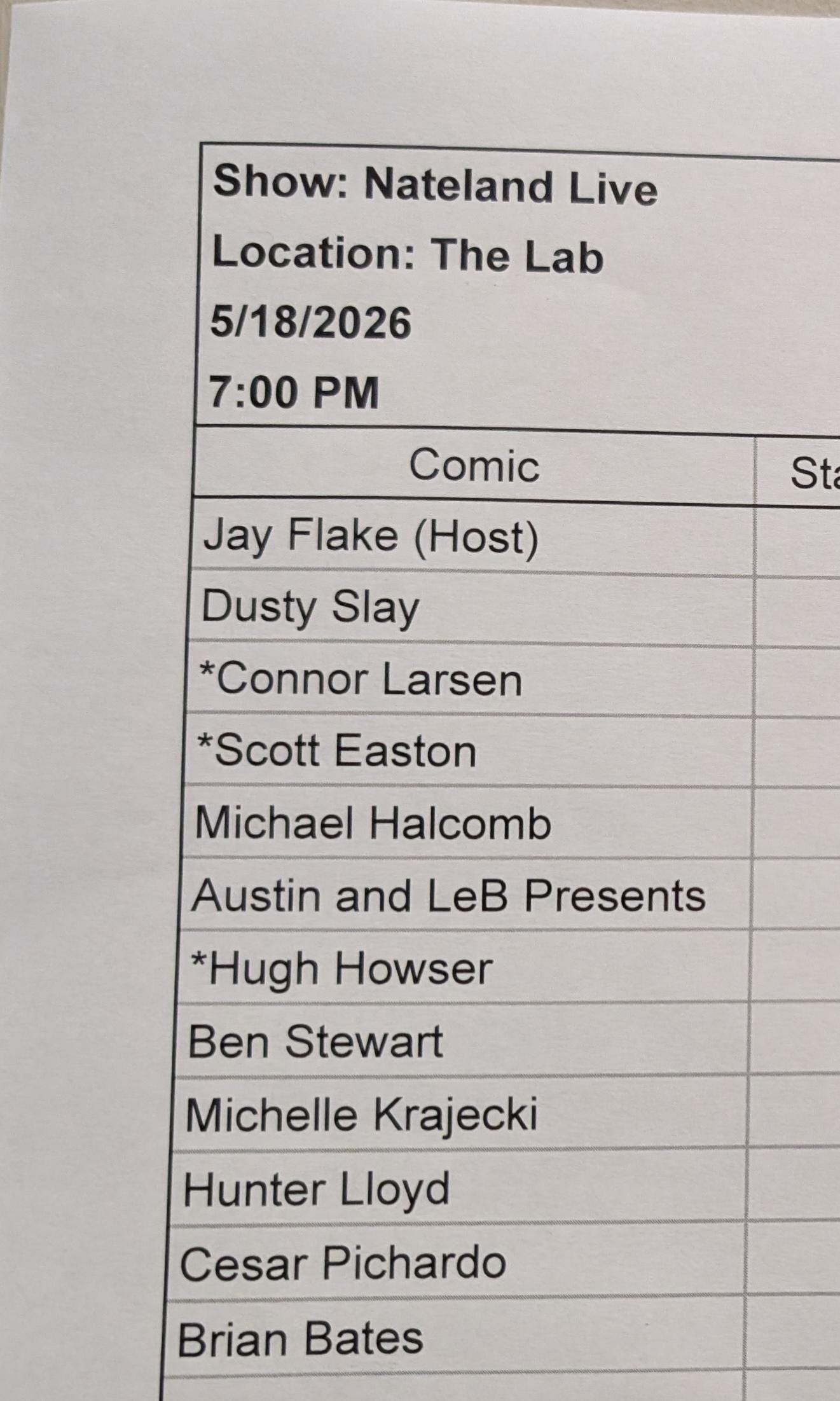
The show I was on was Nateland Live, which is connected to Nate Bargatze’s production world. The room at The Lab at Zanies in Nashville was packed, the operation was extremely professional, and there were comedians there from all over the country: Montana, Florida, Georgia, Tennessee, and North Carolina, etc. Even just sitting around backstage and listening to everybody talk, at times, felt educational. I try my best to just soak as much of it in as possible because every experience like this is unique. But as I reflected on the long drive home and while writing today, I realized there were 12 lessons for me, many of them reminders, but all of them helpful, that I might share with others.
Lesson 1 - Comedy Asks People To Do Objectively Absurd Things: Most reasonable people would never drive ten hours to do something for six minutes. That’s what I had: six minutes of stage time. Comedians like myself somehow convince themselves this is perfectly acceptable behavior because opportunity changes the emotional equation. The possibility attached to a room like this suddenly starts outweighing the inconvenience attached to the drive. That’s one reason I think people have to genuinely love comedy itself to survive the long haul; otherwise, the sacrifices start feeling insane very quickly.
Lesson 2 - Some Shows Feel Weightier Than Others: Not every room carries the same psychological weight. Every venue is different. Some shows feel casual while others feel like there is more hanging in the balance before the first joke even starts. This one felt heavier for me because there were comics there from all over trying to make strong impressions. I don’t tend to get nervous before shows. As I’ve talked about before: I reframe any sense of nervousness and call it adrenaline. That alone takes some pressure off. And I could feel the adrenaline before I ever touched the mic last night. Learning how to handle moments of pressure like that without letting it tighten the performance is part of growing professionally.
Lesson 3 - Professional Comedy Means Adjusting Fast: In true professor fashion, I’d tried to do research beforehand about the shows. The reason for that is because, until the day of, you don’t know how much time you’re getting on stage. In fact, we didn’t know until about 15 minutes before show time. Based on my research, I knew that it’s often 8-12 minutes that folks get, with the twelve or more being reserved for heavy hitters. So, I prepared for eight minutes but had ten ready to go. Then, shortly before the show started, I found out I was getting six minutes. There was no emotional processing period where I got to complain internally about it. I just had to cut material immediately and move forward. I’ve had the opposite happen at other shows. Someone cancels and can’t make it right before you’re about to go up and the booker asks you to do more time. That’s professional comedy more than people realize because conditions change constantly and comedians have to adapt quickly. Showing that you can do that and stick to your time is, I think, a great measure of one’s professionalism.
Lesson 4 - Genuine Friendships In Comedy Are Invaluable: I rode about half the trip with my friend Leb from the comedy duo Austin & Leb. Honestly, that probably improved the entire experience more than anything else outside the performance itself. Comedy can get lonely quickly because everybody is chasing stage time, opportunities, attention, and momentum simultaneously. Having people I can genuinely laugh with outside the performance helps keep me grounded. Friendship matters more in comedy than many people admit openly.
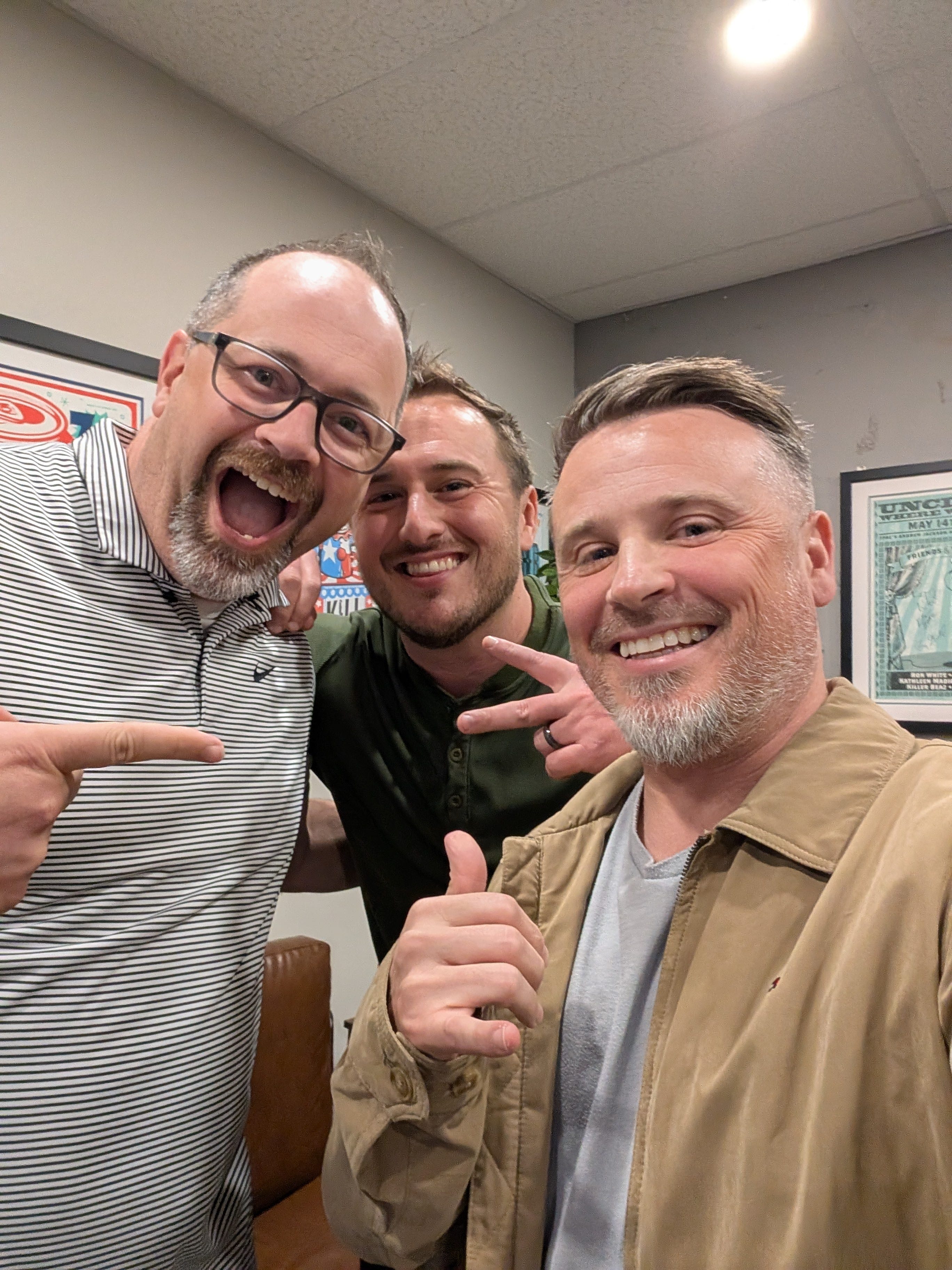
Lesson 5 - Showcases Are Networking Events: Obviously, the performances matter at shows like this or any show for that matter, but during a showcase the room is also full of conversations happening before and after the sets. People notice how comedians carry themselves backstage, how they interact with others, and whether they feel professional or difficult. The longer I stay around comedy, the more obvious this becomes. A comedian is not only being evaluated while holding the microphone; sometimes, in fact, the offstage interactions shape impressions just as much as the set itself. While I don’t prefer showcases with a long lineup of comedians, simply because I think it’s hard for the crowd to get into a rhythm, this can be one of the benefits.
Lesson 6 - Composure Is Key: About thirty seconds before I walked on stage, Brian Bates walked over and said to me, “This crowd is pretty tough!” I laughed and told him, “Thanks for telling me that right before I go up.” Then he clarified that he just did not want me to be discouraged if things didn’t go well. While it’s not the typical type of pep talk you’d want to hear 30 seconds before grabbing the mic, I appreciated his honesty. At the same time, I also realized that I immediately had a choice to make: I could either let that comment shake me mentally (which he was not trying to do!) or simply perform anyway. I chose the latter and, on the other side of it, I also chose the position that, for my set at least, if something didn’t land the way I had hoped, that’s on me.
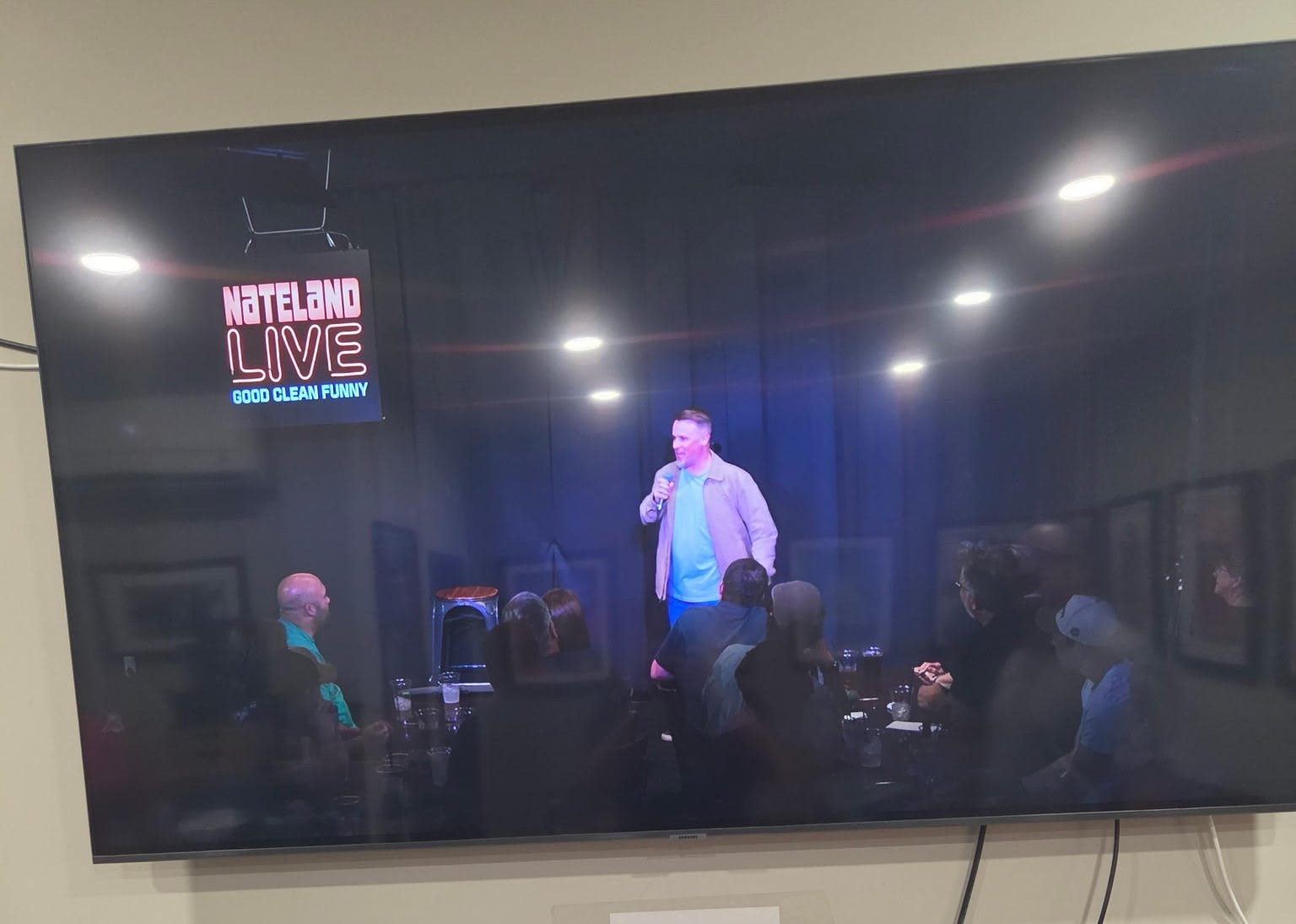
Lesson 7 - Green Rooms Can Be Strange Places: A showcase green room is fascinating because every comedian handles the moment differently, the nerves, the stress, the adrenaline, and so on. Some people isolate quietly while others suddenly become incredibly talkative because nervous energy has to go somewhere. Some comedians stare silently at notebooks while others network aggressively. With enough comedians packed into one room, focus can become quite difficult. I’ve learned that it’s be to just be prepared beforehand because concentration gets much harder once the room fills up.
Lesson 8 - Arriving Early Helps Me: I got to the venue about ninety minutes early and I’m glad I did. I like hearing the staff interact before crowds arrive and watching the room slowly come alive. I like figuring out where the stage sits in relation to the audience and seeing how the environment feels physically before the pressure starts building. That extra time helps because the room starts feeling a little less unfamiliar.
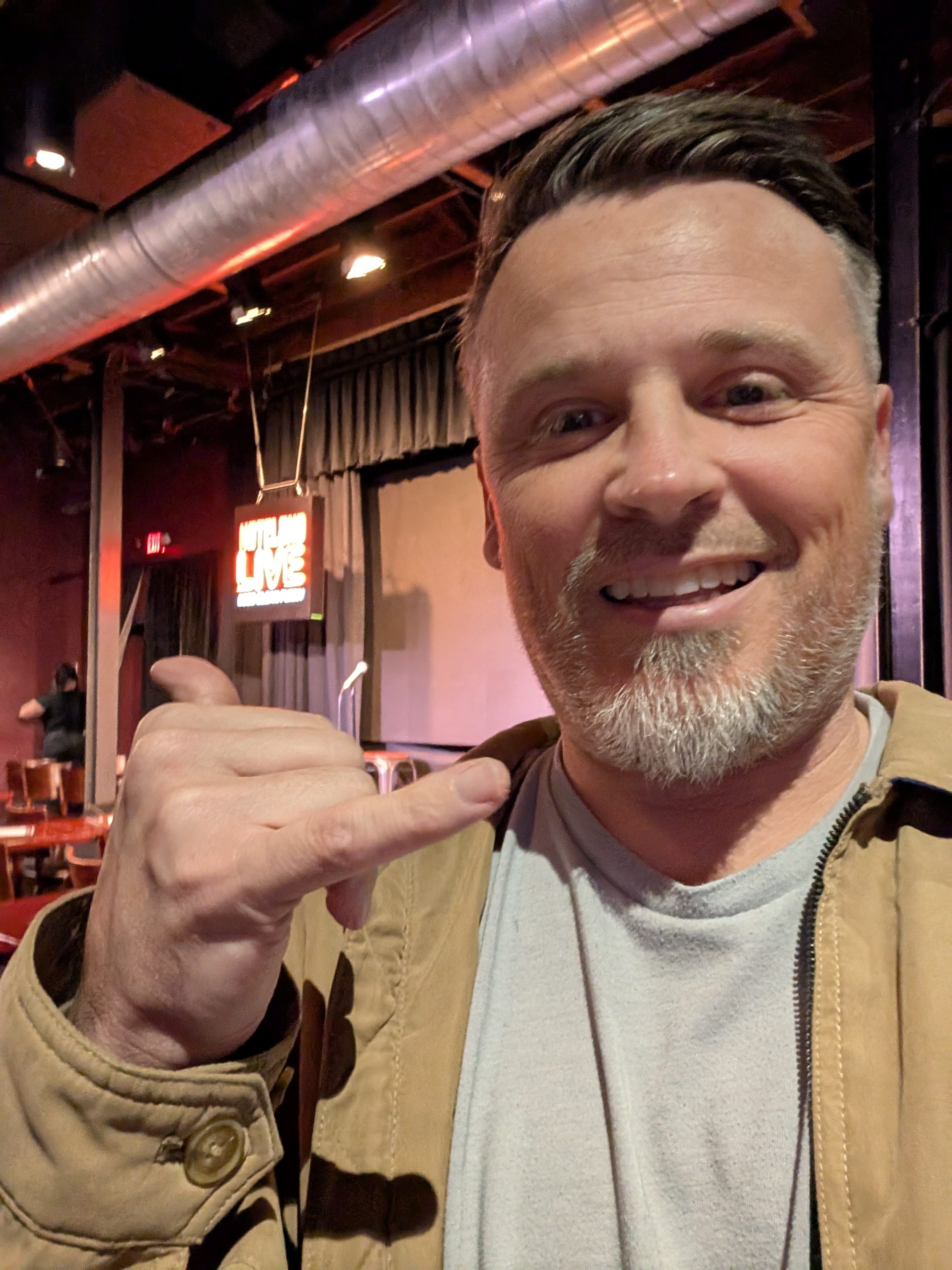
Lesson 9 - Imposter Syndrome Can Show Up Fast: When comedians from different states and different experience levels gather together, comparison can start happening automatically if I’m not careful. Somebody has more credits, more stage time, knows more first names, knows more people in the industry, and so on. If I stay inside those comparisons too long, I can start shrinking back before the performance even begins. At some point, I simply have to remember that if I was invited into the room, I belong in the room, too. That’s what I reminded myself of last night: I belonged there as much as anyone else who was there.
Lesson 10 - Successful Comedians Are Still Just People: I briefly got to meet Dusty Slay and Brian Bates, and both were genuinely kind guys. The Nateland podcast set (now “Public Figures”) sits right beside the green room, which honestly felt a little surreal after seeing it online numerous times. I also found out Anjelah Johnson, a great comedian, was recording while we were there, though I didn’t get to meet her. Situations like that, when you’re around others who’ve reached a certain level of fame, can make comedians (and non-comedians) behave strangely very quickly. Some people fanboy too hard while others desperately push for opportunities, and both reactions usually come from insecurity. My tactic in such situations is to just be me, not seem needy, not come off some kind of way, and if an opportunity to chat arises, then chat. If not, so be it.
Lesson 11 - Monday Crowds Aren’t Saturday Crowds: Every comedian knows that Monday audiences carry a completely different energy into a comedy room. I think this is at least part of what was sitting beneath Brian Bates’ comment to me before I went on stage. On Mondays, people are tired from work and mentally distracted. This was a 7pm show, so people were hungry, and likely emotionally drained before the show even began. A woman sitting near the front was still wearing hospital scrubs when I walked on stage. Some people were actively eating during the performances because they had barely made it there after work and hadn’t had dinner. Those dynamics affect a room. It’s harder to make people laugh after they’ve just finished a Monday shift. It’s even harder to make those same people laugh when they’ve got mouths full of food. All of it affects pacing, timing, and audience responsiveness which, in turn, affects the room’s overall vibe.
Lesson 12 - Every Show Teaches Professionalism: One thing I kept thinking about while driving home in the pitch black through the mountains of TN and NC, was how every show becomes practice in things like preparation, adaptability, networking, composure, timing, emotional control, and professionalism. The audience sees six minutes of comedy, but the comedian experiences everything surrounding those six minutes. Over time, those surrounding lessons may matter just as much as the jokes themselves. That’s part of what makes experiences like this valuable even beyond the actual performance. And, by the way, if you’re ever on this show or plan to be, here are two additional pieces of advice: 1) You do get paid; and, 2) You will be filmed, you will sign a consent form (pay is contingent upon it), but you will not get a recording and are not allowed to record yourself.
So, yeah, I drove ten hours to do six minutes of comedy. Honestly, I would probably do it again at some point because nights like this teach things that cannot really be learned sitting at home or doing small local shows. Every new and unfamiliar room offers a chance to sharpen something precisely because every show exposes another area to grow in. And that’s part of the process whether the set lasts six minutes or sixty.
So, I’ve got to ask you: What’s your process? Do you want to level up in your own comedy journey? If so, I would highly recommend checking out these resources:
FREE - “The Round-Up”: My weekly comedy newsletter, choc-full of insights from videos, articles, and so on. This’ll also give you FREE access to “The Joke Blueprint Playbook.” Get the newsletter HERE.
FREE - The Joke Blueprint Playbook: Act now and get an exclusive, 17-page toolkit that I designed specifically to solve some of the biggest joke-writing struggles comedians have. This comprehensive guide is packed with actionable advice, and it’s entirely exclusive to this community. Get it HERE.
The Joke Writer’s Lab: Stop guessing at what makes people laugh. In this self-paced, online course, you’ll get the tools to find your unique comedic persona and learn the exact mechanics of writing a bulletproof joke. Get it HERE.
The Comedian’s Memory Lab: Never blank on stage again!!! Learn my insider method to build and flawlessly memorize your entire set, whether you are doing 3 minutes at an open mic or headlining for an hour. Get it HERE.